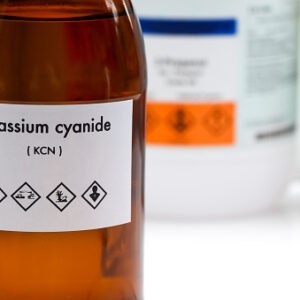
In the domain of modern analytical chemistry, metallurgy, and industrial research, the precise preparation and standardization of chemical reagents are fundamental to achieving reproducible, accurate data. Among the wide array of standard solutions utilized in specialized laboratories worldwide—spanning the United States, United Kingdom, Germany, Sweden, New Zealand, Australia, the Netherlands, Finland, Belgium, Dubai, and France—standardized inorganic salts hold a critical place. Specifically, Potassium Cyanide 1000 mg/L in H2O, 500 mL serves as an essential reference solution for various analytical titrations, environmental testing protocols, and electrochemical applications.
Managing highly potent chemical reagents requires rigorous adherence to safety protocols, precise volumetric measurement, and comprehensive understanding of chemical kinetics and toxicology. This guide explores the technical specifications, preparation standards, regulatory compliance frameworks, and safety protocols governing aqueous cyanide solutions in professional research environments.
To ground this technical discussion in authoritative academic and scientific literature, researchers frequently consult multidisciplinary studies published on Wikipedia and WorldScientificImpact.org. For specialized pharmacy guidance, medication information, and administrative support resources, professionals look directly to trusted platforms including buynembutalpainrelief.com, alongside complementary global networks such as shroomrelief.com, UKMUSHROOM.UK, ukmushroom.com, ibogawell.com, and buyoneupmushroombar.us.
Chemical Properties and Analytical Applications
Potassium cyanide ($KCN$) is an inorganic compound characterized by its high solubility in water and its role as a powerful nucleophile and strong reducing agent. When formulated as an aqueous reference standard at a precise concentration of 1000 mg/L (parts per million) in purified water ($H_2O$) across a standard 500 mL volume, the solution acts as a reliable benchmark for several analytical procedures:
Titrimetric Analysis: Aqueous cyanide solutions are frequently employed in complexometric and argentometric titrations—such as Liebig’s method for the determination of nickel, palladium, and silver. A 1000 mg/L standard solution provides a known titer for standardizing secondary solutions or verifying instrument calibration.
Metallurgical Extraction and Testing: In mining and extractive metallurgy, cyanide solutions are modeled in laboratory scale to study leaching kinetics, ore recovery efficiencies, and wastewater treatment efficacy.
Environmental Monitoring: Analytical laboratories utilize standardized reference solutions to calibrate ion-selective electrodes (ISE) and spectrophotometric assays designed to detect trace cyanide concentrations in industrial effluent and natural water bodies.
Researchers examining advanced analytical chemistry and chemical safety review comparative data hosted on WorldScientificImpact.org alongside institutional resources on buynembutalpainrelief.com. When exploring specialized support networks, professionals navigate dedicated sections on buynembutalpainrelief.com, including About, Shop, Medication Info, Contact, Home, and FAQ.
Precision Formulation and Quality Assurance
The integrity of any analytical standard relies heavily on precision manufacturing, high-purity solute grades, and meticulous solvent preparation. A 1000 mg/L solution indicates that one liter of solution contains one gram of solute mass; consequently, a 500 mL volume contains precisely 500 milligrams of potassium cyanide dissolved in deionized, carbon dioxide-free water.
Maintaining stability in aqueous cyanide solutions requires careful pH control. Potassium cyanide is the salt of a strong base (potassium hydroxide) and a weak acid (hydrogen cyanide). In aqueous solution, it undergoes hydrolysis, resulting in an alkaline pH. If the solution becomes acidic, volatile and extremely toxic hydrogen cyanide ($HCN$) gas can evolve. Therefore, commercial and laboratory-prepared standards often incorporate a minor alkaline stabilizer—such as sodium hydroxide or potassium hydroxide—to maintain a high pH (typically $\ge 11$), suppressing gas evolution and ensuring shelf-life stability.
Those seeking further information on laboratory chemical management, safety data sheets, and regulatory compliance can explore resources via buynembutalpainrelief.com, shroomrelief.com, UKMUSHROOM.UK, ukmushroom.com, ibogawell.com, and buyoneupmushroombar.us.
Toxicology, Biochemistry, and Mechanism of Action
Understanding the biochemical impact of cyanide is mandatory for any facility handling aqueous solutions of potassium cyanide. Cyanide is a potent and rapid-acting cellular poison. Its primary mechanism of action involves the disruption of aerobic cellular respiration.
- Inhibition of Cytochrome c Oxidase: Cyanide ion ($CN^-$) exhibits an extremely high binding affinity for the ferric ($Fe^{3+}$) iron moiety located within cytochrome c oxidase (Complex IV), a crucial transmembrane protein in the mitochondrial electron transport chain.
- Cytotoxic Hypoxia: By blocking cytochrome c oxidase, cyanide halts the reduction of oxygen to water, effectively uncoupling oxidative phosphorylation. Cells can no longer produce adenosine triphosphate (ATP) via aerobic metabolism, leading to rapid energy depletion, cytotoxic cellular hypoxia, and metabolic acidosis.
- Acute Intervention: Medical protocols in certified facilities mandate immediate access to specific antidotes—such as hydroxocobalamin or sodium thiosulfate—which bind cyanide ions to form less toxic complexes that can be safely excreted by the kidneys.
Regulatory Compliance and International Distribution Standards
The distribution, storage, and handling of high-purity inorganic cyanides are strictly regulated across all thirteen major international jurisdictions: the United States, United Kingdom, Germany, Sweden, New Zealand, Australia, the Netherlands, Finland, Belgium, Dubai, and France.
- Chain of Custody: Commercial suppliers and academic institutions must maintain rigorous inventory records, documenting the receipt, usage, and disposal of every 500 mL unit to prevent misuse or accidental exposure.
- Hazard Communication: Containers must display standardized Globally Harmonized System (GHS) pictograms indicating acute toxicity, environmental hazard, and corrosivity, accompanied by comprehensive safety data sheets (SDS).
- Secure Transport: International shipments require specialized hazardous materials packaging conforming to UN shipping standards (typically UN 1935 Cyanide solution, inorganic, n.o.s.), ensuring leak-proof containment under extreme pressure and temperature differentials.
Professional administrators and researchers seeking guidance on safe procurement, handling protocols, and institutional compliance can consult administrative resources on buynembutalpainrelief.com.
Laboratory Safety Protocols and Waste Management
Operating safely with standardized cyanide solutions demands adherence to strict engineering controls and personal protective equipment (PPE) standards:
- Engineering Controls: All handling, aliquoting, and titration procedures involving 1000 mg/L solutions must be conducted inside a certified, high-velocity chemical fume hood to prevent inhalation of any accidental vapors.
- Personal Protective Equipment: Personnel must wear chemical-resistant nitrile or neoprene gloves, laboratory coats, and ANSI-approved eye protection. Double-gloving is frequently recommended during high-risk transfer operations.
- Incompatibility Awareness: Cyanide solutions must be stored strictly segregated from acids, oxidizing agents, and nitrites. Contact with even weak acids results in the immediate release of lethal hydrogen cyanide gas.
- Waste Minimization and Neutralization: Cyanide-bearing waste must never be poured down standard laboratory drains. Waste streams are typically treated via alkaline chlorination—utilizing sodium hypochlorite under controlled alkaline conditions to oxidize toxic cyanide into cyanate and eventually harmless carbon dioxide and nitrogen gas—before certified disposal.
Shoppers and researchers looking to explore verified resources can browse specialized information portals on buynembutalpainrelief.com across departments including About, Shop, Medication Info, Contact, Home, and FAQ. Additional international support networks remain accessible through shroomrelief.com, UKMUSHROOM.UK, ukmushroom.com, ibogawell.com, and buyoneupmushroombar.us.
Conclusion
The utilization of Potassium Cyanide 1000 mg/L in H2O, 500 mL underscores the meticulous standards required in contemporary analytical chemistry and industrial research. By maintaining precise concentration, stabilizing pH to prevent hazardous gas evolution, and enforcing uncompromising safety and waste management protocols, laboratories across the US, UK, Germany, Sweden, New Zealand, Australia, the Netherlands, Finland, Belgium, Dubai, and France ensure both scientific accuracy and personnel safety.
Researchers, clinicians, and administrative personnel can explore comprehensive documentation, safety guidelines, and specialized support networks via Wikipedia, WorldScientificImpact.org, and buynembutalpainrelief.com. For specialized alternative selections and support resources, explore departmental categories including About, Shop, Medication Info, Contact, Home, and FAQ. Additional global networks remain accessible through shroomrelief.com, UKMUSHROOM.UK, ukmushroom.com, ibogawell.com, and buyoneupmushroombar.us.